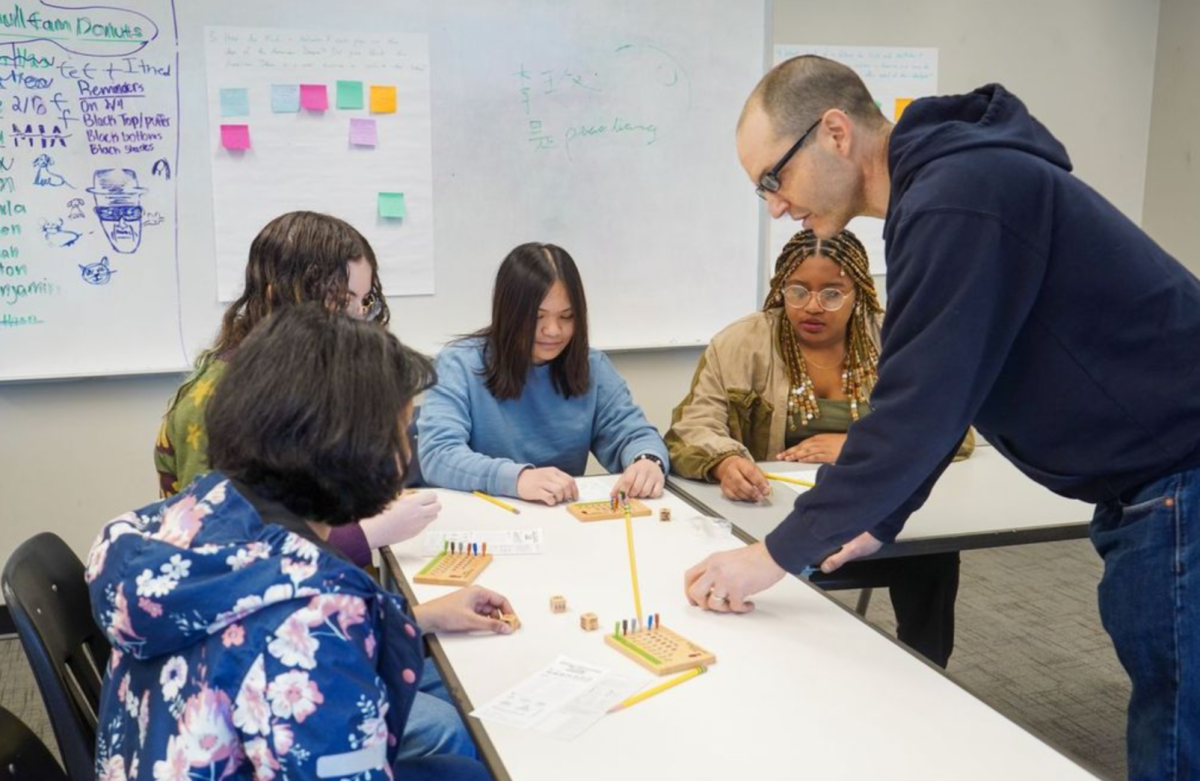



If you’ve ever had Dr. Jeremiah McCall—known in the hallways as D. Mac—as your history teacher, you know he doesn’t just lecture about the past. He aims to immerse students in it through the use of historical games. Since the summer of 2024, D. Mac has been developing his latest project: Dawn of Cities, a board game designed to teach ninth graders about the origins of cities in Ancient Mesopotamia. The game is based on earning prestige, showing how elite households naturally came together to form early urban centers. And why does he care so much about incorporating historical games into his classes? For D. Mac, fun is a serious part of learning. As he put it, “If I can’t be the best history teacher in the world, I want to at least be a contender.” He strongly believes that games are engaging, they increase comprehension, and most of all, they are fun.
Game design isn’t new for Dr. McCall. Over 25 years ago, when he began teaching, he started casually creating games to engage students. In 2005, he taught a senior elective on designing historical simulation, which further deepened his interest. Due to Country Day’s extensive laptop program, he was able to dive into the world of historical video games as well. In 2018, he reached out to a podcast called “Game Design Roundtable” to ask if he could talk with them about history games as historical problem spaces. While on the podcast, they asked him about a Roman Republic board game he had created but had not yet thought much of. After spending so much time talking about that game, he realized that contrary to what he thought before that podcast, he was, in fact, a game designer. That recognition inspired a book on designing historical games and led him to act on his fascination with using play as a tool to teach history, making him the teacher that he is today.
Learning Through Game Design
- Mac’s own assumptions about the first city’s formation were challenged during his newest game’s development. Initially, he thought early cities emerged for markets and trade, but after consulting Dr. Geoff Emberling, a Mesopotamian archaeologist at the University of Michigan, Dr. McCall learned a different story: elite households lived close together, competing through feasts, sacrifices, and displays of status. These interactions became useful in some situations and eventually produced cities organically, without material goods as the driving force.
From this research, D. Mac designed a game where this new look at history is not just taught — it’s experienced. Players must navigate early village life, managing food, workers, and the household’s ambitions, all while coming together as a community. Success comes from earning prestige points and mirroring the social structures of the first cities.
Inside the Game: How Dawn of Cities Works
Here’s a peek at the game in action:
- Goal: Earn prestige to gain influence and build your community.
- Resources: Meat, grain, and workers are the only things needed, but are essential to power actions and feed your people.
- Actions: Players can
- Build their own structures or community buildings,
- Feast and sacrifice to gain prestige, or
- Recruit neighboring villages to join their household.
- Challenges: Draw “bad event” cards—raiders, disputes, or household conflicts—to test your strategy. Community buildings help mitigate these risks.
- Win Condition: The town accumulates points from collective actions, eventually becoming a city — while players individually aim for the highest prestige.
The game blends strategy with history, encouraging students to understand the meaning of personal agency in ancient times and how community growth shaped early urban life.
Playtesting and Feedback
Dr. McCall has run multiple playtests of Dawn of Cities with his ninth graders, gathering feedback and refining the rules. Through it all he has learned one major lesson: simplicity is key. Even small math or one extra rule can slow down classroom play, so he streamlined the game to emphasize the one, central goal: gaining prestige and using early city institutions to help that quest. Students also helped him realize how to balance individual competition with communal growth in order to provide a support system to elite households selfishly pursuing their own goals of personal prestige. D. Mac will continue to playtest this game in October to make it as fun of a learning experience as possible. He said that he will never stop learning and improving his games, because (as his wife puts it) “[I’m] a work in progress,” always learning and improving.
Why Games Matter in History
For Dr. McCall, games are more than entertainment — they’re a lens for understanding history. “Games foster discussions about agency,” he explains, showing how individual choices influence larger systems. “They encourage students to think critically about historical narratives, challenge assumptions, and engage with the past in a tangible way.” Through play, students see history not as a series of dates and facts, but as a living story of human behavior, allowing them to connect with and understand the world on a deeper level.
With Dawn of Cities, Dr. McCall has created more than a classroom activity; he’s built a tool that makes history immersive and entertaining. By combining research, experimentation, and student feedback, he’s proving that games can help broaden one’s historical perspective — one city at a time.
The podcast that helped D. Mac realize his skill as a board game designer:
An outline of Dawn of Cities:
Gaming the Past | historical video games in the classroom and beyond
His other works on the Gaming the Past website: